
- Heating
- Cooling
- Plumbing
- Indoor Air Quality
- Electrical
- Specials
- About
- Contact
Service 7 Days Per Week!
South Jersey summers hang on late, but the shift to cooler mornings always comes faster than expected. One week you’re still running the AC, and the next you’re reaching for a sweater before your furnace has even turned on for the season. Getting ahead of that shift now, rather than waiting for the first cold snap, is the easiest way to avoid a heating breakdown once temperatures drop for good across Burlington, Camden, Gloucester, Mercer, Atlantic, and Ocean Counties.
Here’s a practical checklist to get your furnace ready before you actually need it.
A clogged filter is one of the most common reasons a furnace struggles to heat evenly or shuts off unexpectedly. Over the summer, filters collect dust, pet hair, and debris even if the system wasn’t running heat. Swap it out before the season starts, and mark your calendar to check it monthly once the furnace is in regular use.
Before the first cold morning, run a quick test: switch the thermostat to heat and confirm the furnace kicks on and responds to temperature changes. If you’re using an older thermostat, fall is also a good time to consider upgrading to a programmable or smart model, which can help manage energy costs through the winter.
Walk through your home and make sure vents and registers aren’t blocked by furniture, rugs, or curtains. Restricted airflow forces your system to work harder, which can shorten its lifespan and drive up utility bills.
When you first turn the furnace on for the season, it’s normal to notice a faint burning smell as dust burns off the heat exchanger. That should clear within a few minutes. If the smell lingers, or if you hear banging, rattling, or squealing, that’s a sign to call for heater repair before running the system further.
Furnaces that burn gas produce carbon monoxide as a byproduct, and a malfunctioning unit can allow it to leak into your home. Test every CO and smoke detector now, and replace batteries as needed. This is especially important for gas furnace systems, which should also have their venting and exhaust checked as part of a professional inspection.
Give your furnace some breathing room. Move boxes, holiday decorations, or anything stored nearby, since a cluttered furnace closet or utility room can restrict airflow and create a fire hazard.
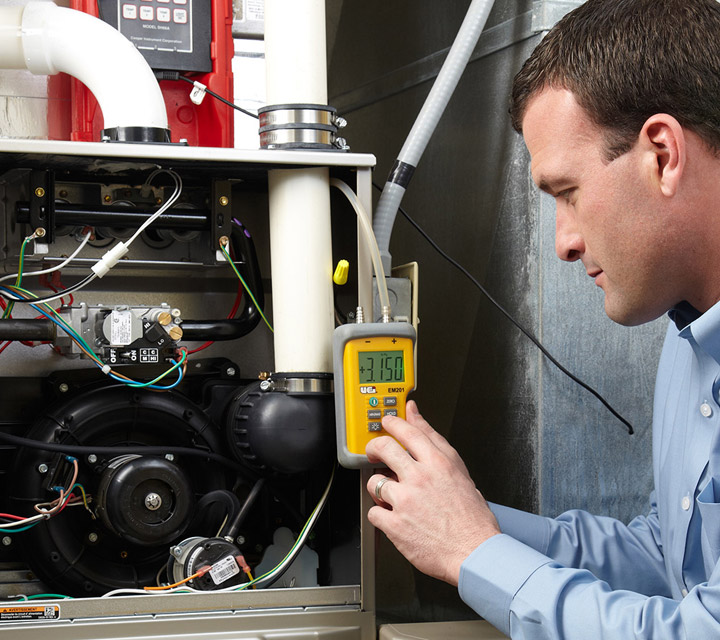
DIY checks catch the obvious issues, but a trained technician can spot the problems you can’t see: a cracked heat exchanger, worn electrical connections, low refrigerant in a heat pump system, or a pilot light and ignition system that isn’t firing efficiently. A furnace tune-up typically includes cleaning components, checking safety controls, and confirming the system is running at its rated efficiency, which can help lower winter heating costs and reduce the odds of a mid-January breakdown.
Some furnaces come out of a fall inspection needing more than a tune-up. If your technician flags a system that’s aging out or repeatedly needs repairs, it’s worth discussing heater replacement options before the coldest months hit, rather than being forced into an emergency decision when the system fails outright.
The best time to prep your furnace is before you’re relying on it every day. A quick maintenance visit now can mean a warmer, more efficient winter and fewer surprises when the temperature drops. If it’s been a while since your last service, joining a maintenance plan is an easy way to keep both your heating and cooling systems on a regular inspection schedule year-round.
If you notice a problem outside of business hours once the season is in full swing, Fante’s offers emergency HVAC service around the clock, so a furnace issue doesn’t have to mean a cold house overnight.
Ready to get your furnace checked before the cold weather arrives? Contact Fante’s Home Services to schedule your fall furnace tune-up today.
Need an Electrician, Plumbing Or HVAC Technician? Call Fante’s Home Services At 1-609-445-2939 Or Click To Contact Us Online.


We come to work at Fante’s Home Services Heating, Cooling, Plumbing & Electrical everyday with one goal: provide quality service, with outstanding customer care. Servicing the Burlington, Camden, Gloucester, Mercer, Atlantic & Ocean County New Jersey area.
Privacy Policy | Terms of Use | Service Areas | Sitemap | ADA Notice


35 Charleston Rd. Willingboro, NJ 08046
571 Route 168 - Suite J, Blackwood, NJ 08012